Sand-River Drives in Ruaha National Park
Sand-river drives in Ruaha National Park follow the dry beds of the park’s seasonal watercourses, where firm sand lets a 4×4 travel in the channel itself, tracks in the surface reveal what passed overnight, and animals gather at the water held beneath. It is the signature style of game driving here. Ruaha is one of Tanzania’s largest national parks, in the south-central Iringa Region, and the anchor of the country’s quieter southern safari circuit.
What a Sand-River Drive Involves on Safari
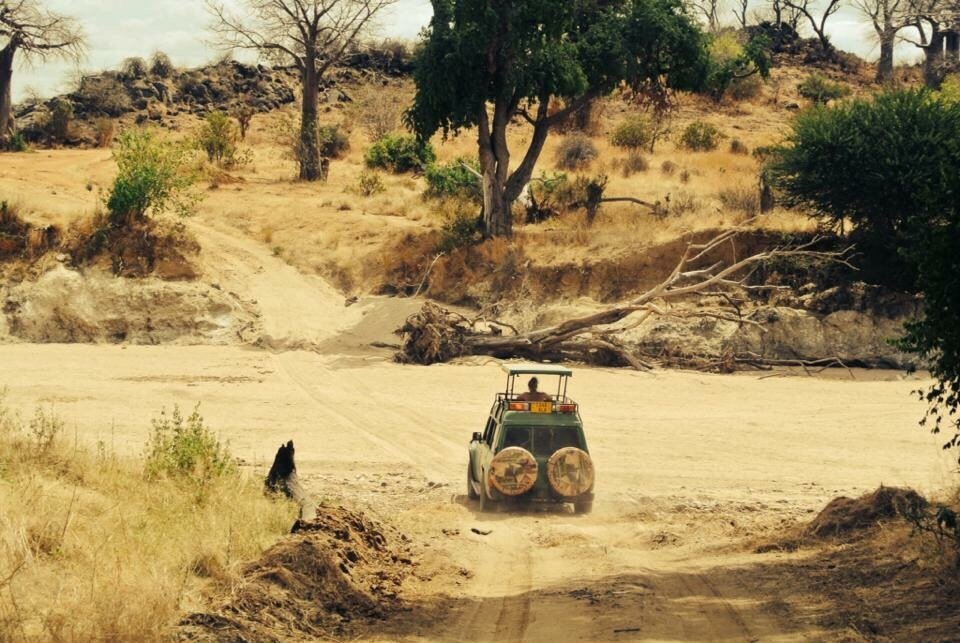
A sand-river drive means working the bed of a dry seasonal watercourse rather than the roads through the bush. Ruaha has a network of these rivers, the Mwagusi, the Mdonya, the Jongomero and the Mzombe among the main ones, and in the dry season their broad channels of pale, firm sand become the most productive routes in the park. Where conditions allow, a guide takes the vehicle down into the bed and drives along it.
The character of the outing is quite different from a road drive. You are travelling at the level of the animals using the channel, with banks rising on either side and long views up and down the watercourse, and the pace is slow because there is so much to read in the surface underfoot. This is the style of driving most closely associated with a Ruaha safari, and it is a large part of why the park guides so well.
It is worth knowing that this is not possible everywhere or always. Whether a given stretch can be driven depends on how firm the sand is, which varies along a single riverbed and changes as the season advances, so a guide will move between the channel and the tracks above it through the course of a morning. Some beds are never driven at all. The best drives usually mix the two, dropping into the bed where it carries the vehicle and climbing out where it does not.
Why Sand Rivers Are the Best Game Corridors on Safari
Four things make a sand river productive, and they all coincide in the same narrow strip. There is water beneath the sand, which draws animals in when the surrounding country has dried out. There are long, clear sightlines along the open bed, so you see movement at distance. There is denser vegetation and larger trees on the banks, which holds species the open ground does not, particularly leopards. And wildlife uses the channel as a natural highway through the bush.
In a park of over twenty thousand square kilometres, that concentration matters enormously. Instead of searching a vast area at random, you work a defined corridor where the odds are stacked in your favour. A patient morning along a few kilometres of sand bed will usually outproduce a long drive ranging widely, which is the central lesson of game viewing on a Ruaha safari.
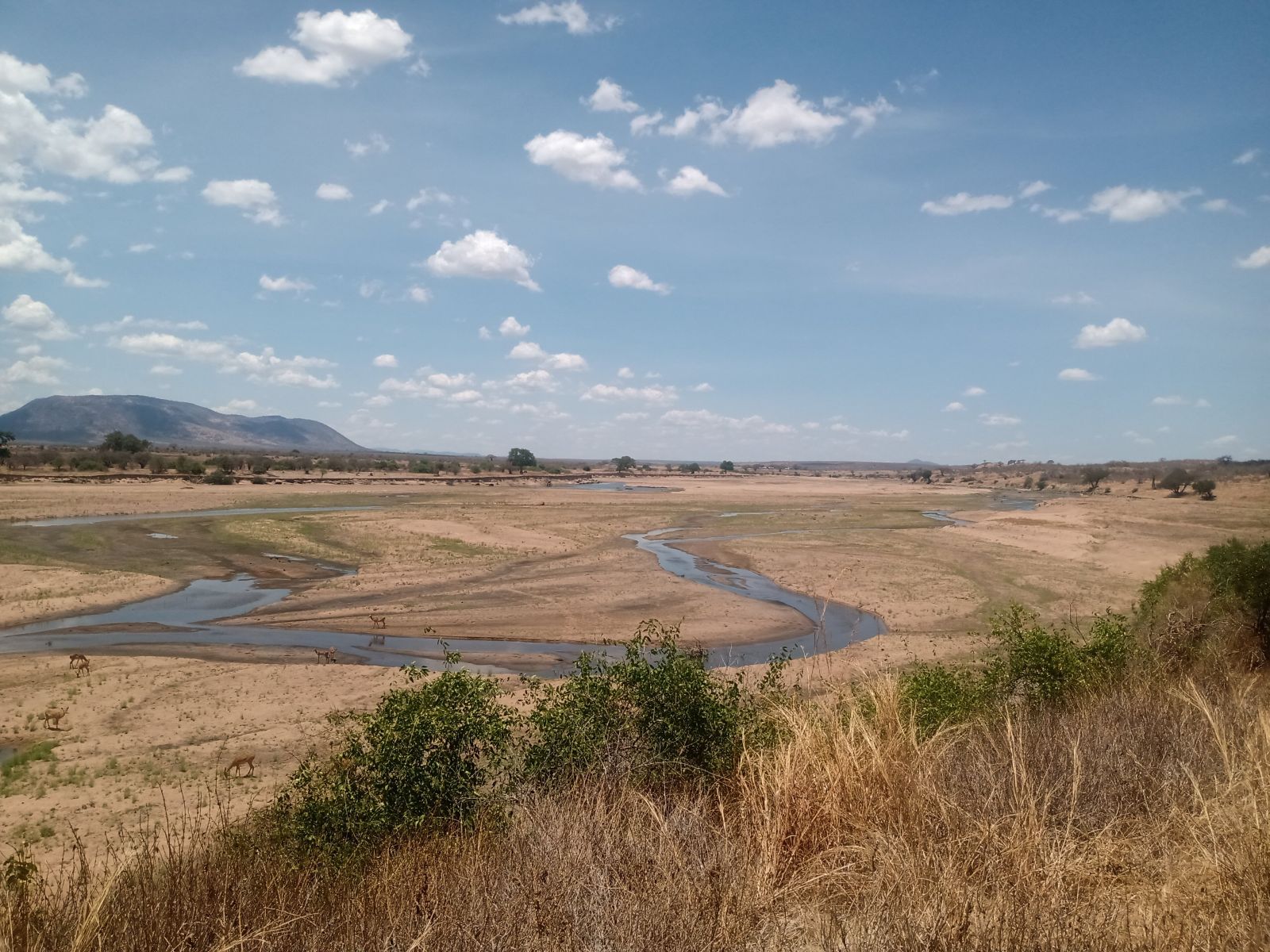
Water beneath the surface, clear views along the channel, thick cover on the banks and animals using it as a road. Everything a game corridor needs happens in the same narrow strip of sand.
Reading Tracks in the Sand on a Ruaha Safari
The finest thing about a sand-river drive is that the ground keeps a record. Fine, pale sand takes an impression better than almost any surface, so a stretch of bed reads as a log of the previous night: the neat double line of a leopard, the broad pad of a lion, the scuffed trails of a wild dog pack, the deep craters left by elephants.
A good guide will stop the vehicle and read it for you, telling you not only what came through but roughly when, in which direction, and sometimes whether it is worth following. Tracks laid after the last vehicle passed are fresh, which is why the first drive of the morning is so valuable, before the record is driven over. Even on a quiet morning, the sand tells you the park is far busier than it appears on a Ruaha safari.
Elephants and Water Beneath the Sand
The reason the beds hold animals at all is the water sitting a short way beneath the surface, and the elephants are the ones who reach it. Using trunks and front feet, they excavate holes in the sand until water seeps up, waiting for it to clear before drinking, and the wells they dig then serve everything else that comes along.
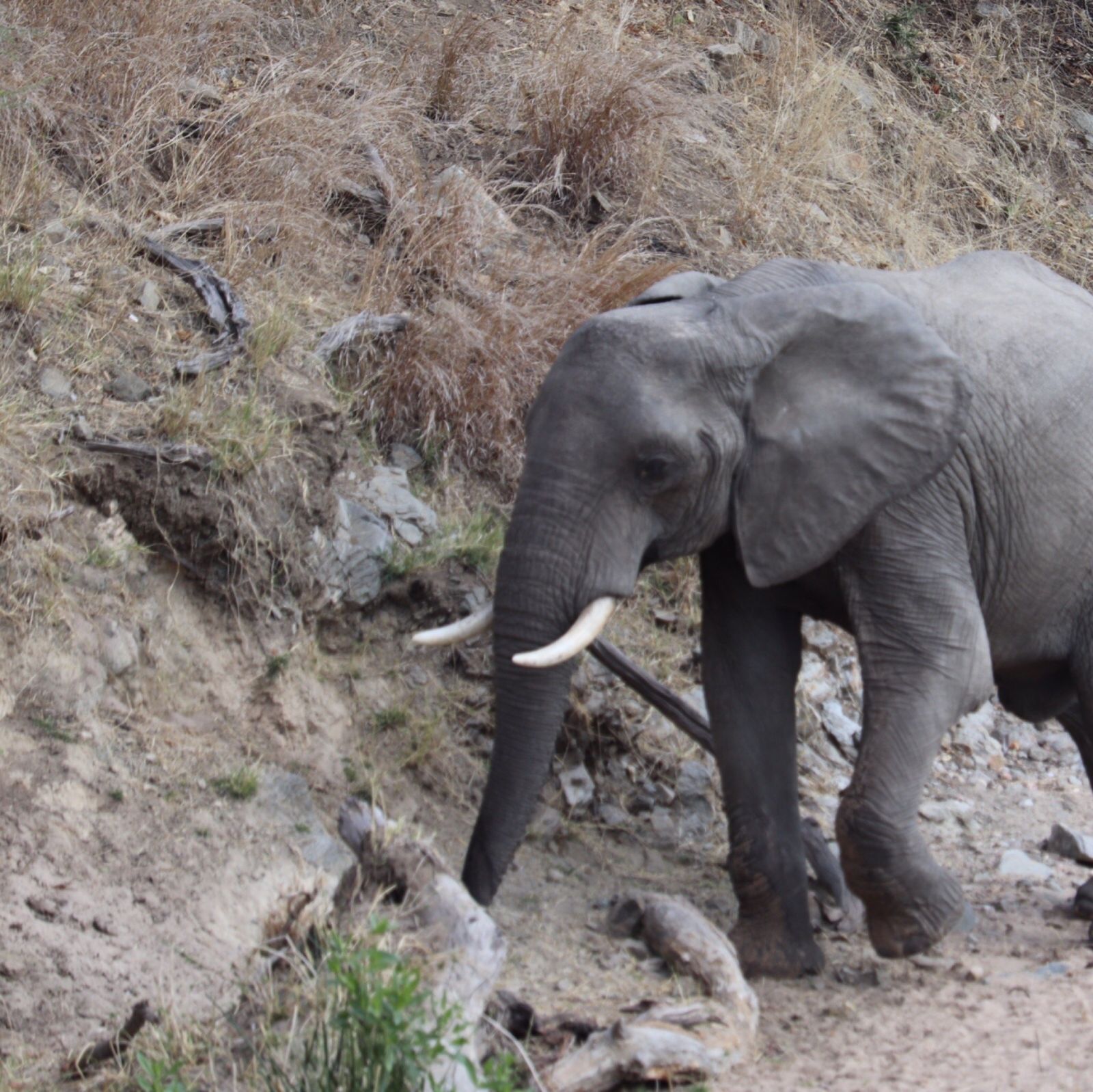
This makes an active digging site one of the best places to park up on a drive. Impala, baboons, birds and other animals come to drink at holes they could never have made themselves, so a single family group of elephants ends up provisioning a stretch of valley. Stopping quietly near a working site rather than pressing on is often the most rewarding decision of a Ruaha safari morning.
The wells also explain why sand rivers stay busy long after the surrounding country has emptied. A dry bed with no visible water may look like the least promising place in the park, yet it can be the one spot for kilometres where anything can drink. Once you understand that, the logic of spending a whole morning on what appears to be a sandy track rather than heading for open plains makes complete sense.
How Guides Drive the Sand Beds
Driving in a riverbed asks something of both vehicle and driver. It needs a capable high-clearance 4×4, and it needs a guide who can read where the sand is firm enough to carry the weight and where it is soft enough to bog a vehicle down, since a stuck vehicle in a remote park is a serious matter rather than an inconvenience. Experienced guides know their beds intimately and pick lines accordingly.
They also drive quietly, cutting the engine at stops so you can hear alarm calls and movement, and they position with the light and the wind in mind. Not every stretch is driveable, and after rain none of it is, so a guide will move between the bed and the tracks above depending on conditions. That judgement is precisely what you are paying for on a guided Ruaha safari.
Walking the Sand Rivers on Safari
The same features that make sand beds good to drive make them superb to walk. Where camps offer guided walking safaris, always led by an armed ranger, a sand riverbed is often the chosen route, because the open channel gives clear sightlines for safety and the surface holds the tracks a guide wants to show you.
On foot the scale changes completely. A leopard print you glanced at from a vehicle becomes something you crouch over, and the guide can talk you through the difference between hyena and wild dog, or work out the sequence of animals that passed. Combining a drive along one bed with a walk along another gives two quite different perspectives on the same feature during a Ruaha safari.
Walking also gets you into stretches a vehicle cannot reach, since narrow or soft sections that would trap a 4×4 are simply walked through. Guides sometimes use this to work a bed that is too soft to drive but full of sign, which can be among the most productive outings of a trip. The rules are strict, with single file, quiet voices and the ranger leading, but the reward is the sand river at its most intimate.
Best Time of Year for Sand-River Drives in Ruaha
Sand-river driving is emphatically a dry-season activity, from June to October, and best of all from August when the beds are at their firmest and the surrounding country at its driest. This is when the water beneath draws the heaviest concentrations of game, when the digging behaviour is most active, and when the sand carries a vehicle reliably.
In the green season from November to April, the rivers may actually run, sometimes with force, which is a fine sight but ends sand-river driving entirely, since a flowing river cannot be driven and a wet bed will trap a vehicle. The game also disperses because water is available everywhere. So if this style of game viewing appeals, and it is the park at its most characteristic, plan your Ruaha safari for the dry months.
Frequently Asked Questions
What is a sand-river drive?
It is a game drive that follows the bed of a dry seasonal watercourse rather than the roads through the bush. In the dry season the broad channels of firm pale sand become the park’s most productive routes, and where conditions allow a guide will take the vehicle down into the bed and drive along it.
Which sand rivers can you drive in Ruaha?
The park has a network of them, with the Mwagusi, Mdonya, Jongomero and Mzombe among the main ones. The Mwagusi is the most celebrated for game viewing, while the Mdonya runs through miombo woodland known for sable and roan. Which you drive depends on where your camp sits and on conditions.
Why are tracks in the sand so useful?
Because fine pale sand takes an impression better than almost any surface, so the bed records everything that moved overnight. A guide can identify what passed, roughly when and in which direction, and sometimes decide whether to follow. Tracks laid after the last vehicle are fresh, which is why the first drive of the morning is so valuable.
Is driving in a riverbed safe?
Yes, with a capable high-clearance 4×4 and an experienced guide who knows where the sand is firm enough to carry the vehicle. Soft sand can bog a vehicle down, which is serious in a remote park, so guides pick their lines carefully and avoid stretches that are not driveable. After rain, riverbed driving stops altogether.
How much does a sand-river drive cost?
Sand-river driving is simply how game drives are conducted here in the dry season, so it carries no separate fee beyond your normal safari cost. Park entry is currently around 30 US dollars per non-resident adult per 24 hours before 18 percent VAT. A guided walk along a sand bed carries its own fee, often around 20 to 40 dollars per person. Confirm current fees with TANAPA before you travel.
Plan Your Ruaha Safari
Driving the sand beds well takes a guide who knows which stretches carry a vehicle, where the elephants are digging and how to read the tracks, so the guiding matters more than the itinerary here. The safari companies and tour operators listed on this website run sand-river drives across Ruaha through the dry season with guides who know these channels intimately.
Whether the budget is tight or open, the drives, guiding, flights and park bookings are handled in the background so none of the admin lands on you. Want a proper quote, or just a steer on the best sand rivers for your dates? Reach out to the operators listed here, and a real person, not a bot, will get back to you.