Leopard and Cheetah Spotting in Ruaha National Park
Leopard and cheetah spotting in Ruaha National Park means working the riverine woodland for leopards and the open plains for cheetahs, guided by an expert who reads tracks, alarm calls and behaviour. Ruaha holds reliable leopards and one of the few cheetah populations left in East Africa, so both cats are realistic on a well-timed trip. Ruaha is one of Tanzania’s largest national parks, in the south-central Iringa Region, and a leading predator destination on the southern safari circuit.
Spotting Leopards and Cheetahs on a Ruaha Safari
Ruaha is best known for its lions, but the other two big cats are what many seasoned travellers come hoping to see. Leopards are present in good numbers and seen fairly regularly, while cheetahs, though scarcer, make Ruaha one of the few places in East Africa where they still hold on. Spotting either takes patience and a good guide, since both are secretive in their own ways, but the park’s quiet drives and varied country give you a real chance at both on the same Ruaha safari.
The two cats want different habitats, which shapes how you look for them. Leopards favour the thick riverine woodland and rocky outcrops where they can hunt from cover and stash a kill in a tree. Cheetahs need open ground where their speed counts, so they work the plains and lighter bush. A drive that covers both kinds of country gives you the widest shot at seeing each, and a guide who knows which areas hold which cat will shape the outing accordingly.
Where to Find Leopards on a Ruaha Safari
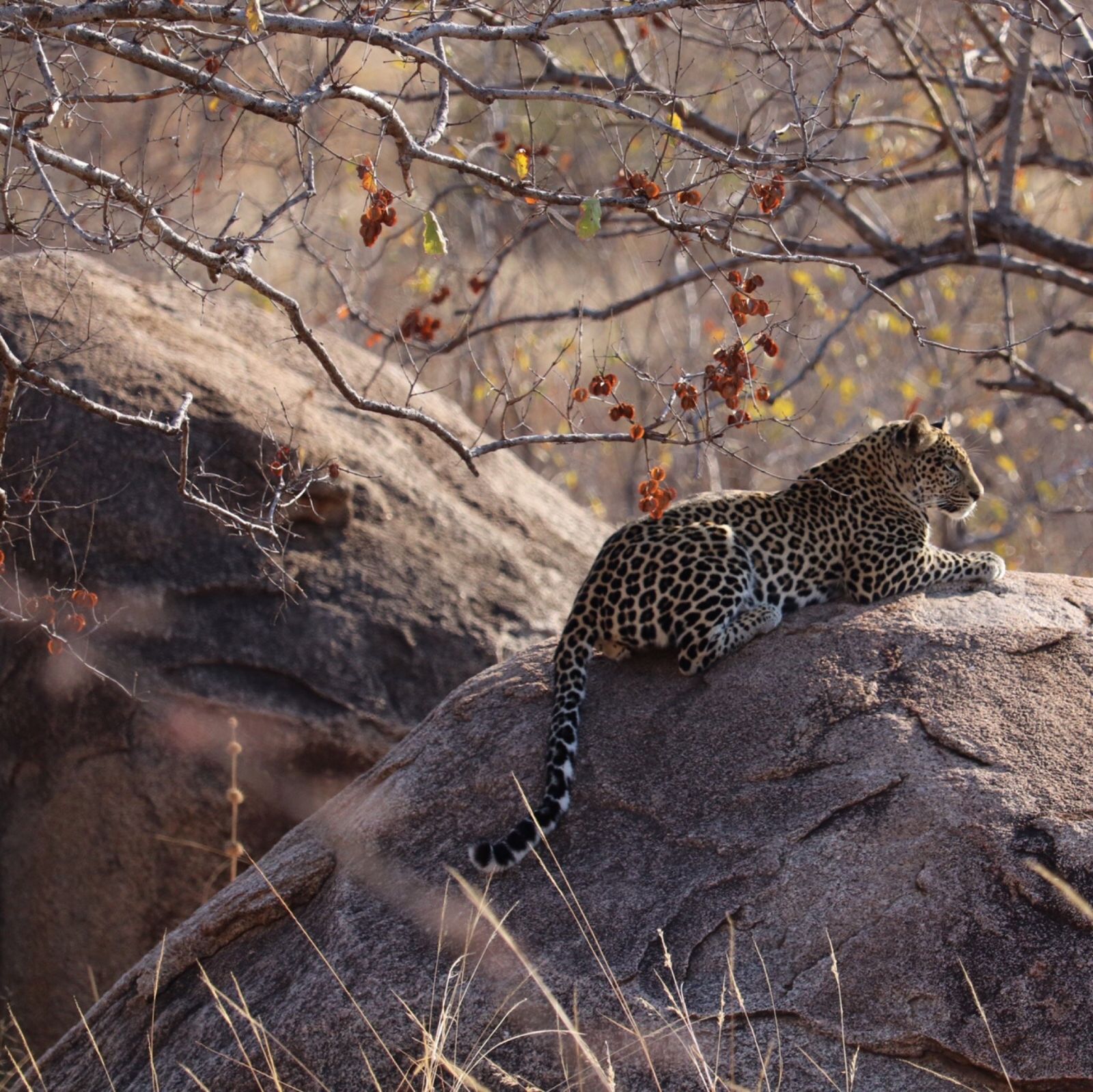
Leopards in Ruaha stick to cover. Look for them along the riverine strips of the Great Ruaha and its sand tributaries, where dense vegetation, big trees and broken ground give them everything they need. Rocky outcrops and the boulder-strewn slopes below the escarpment are also good, since leopards use the elevation and the crevices for resting and watching. Guides work these areas slowly, scanning the branches of large trees where a leopard may be draped through the heat of the day or where a kill has been hoisted out of reach of lions and hyenas.
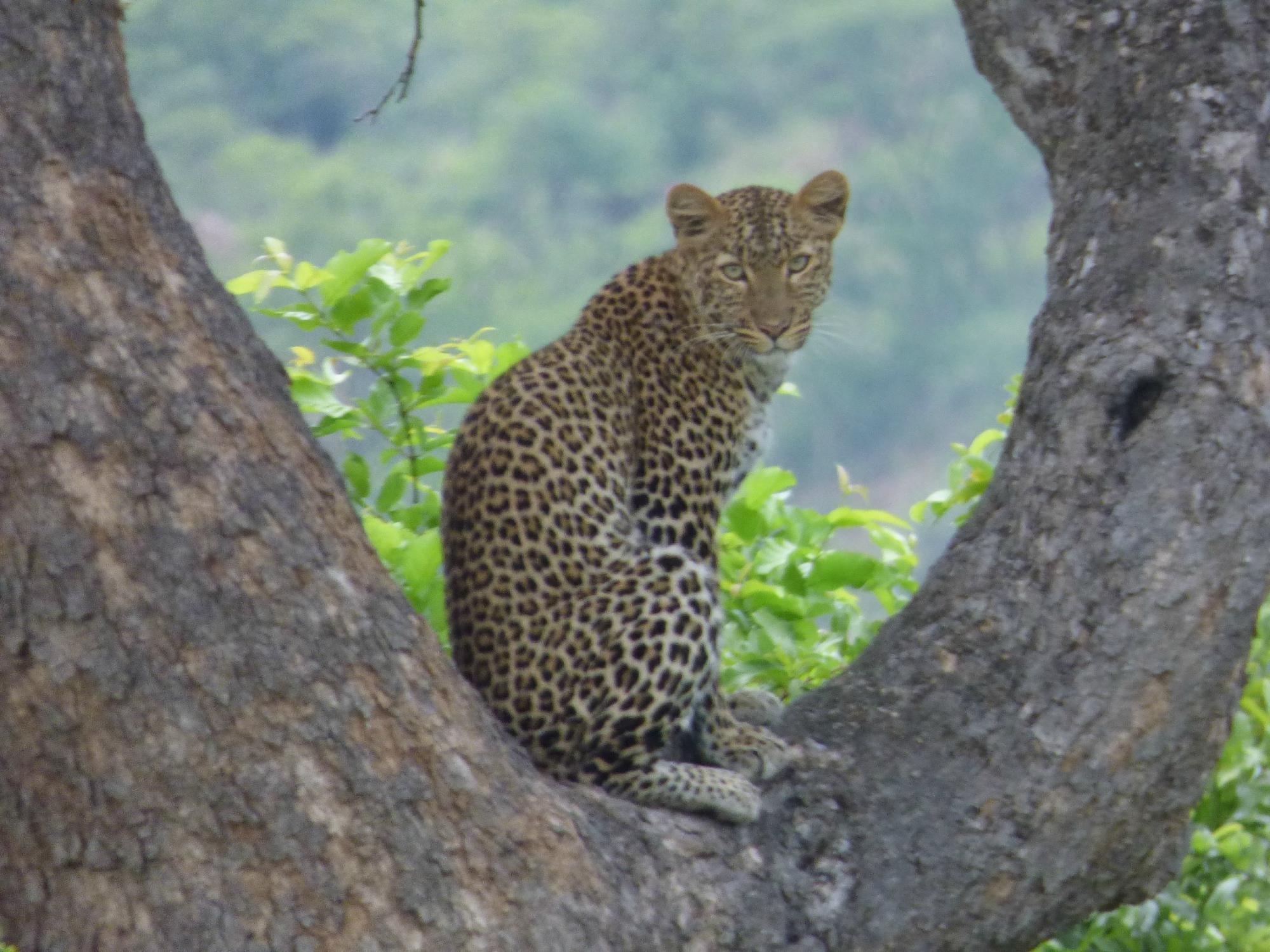
Because leopards are largely nocturnal and superbly camouflaged, they are far more often present than seen. A pattern of rosettes in dappled shade is close to invisible until it moves, which is why guides look for the shape of a tail hanging from a branch or the pale flash of a chest rather than the whole animal. If your camp is licensed for night drives, that outing raises your odds considerably, since leopards become active after dark on a Ruaha safari.
Cheetahs on the Open Plains: A Rare Safari Sighting
Cheetahs are the harder of the two, and finding one is a genuine prize. Ruaha holds one of the few remaining cheetah populations in East Africa, a fact that gives the park real standing among big-cat destinations, but the animals are thinly spread across a vast area. Look for them on the open plains and in lighter, more sparse bush, where they can build the speed a hunt demands, and often on slightly raised ground, since cheetahs like to sit on a termite mound or a low rise to scan for prey.
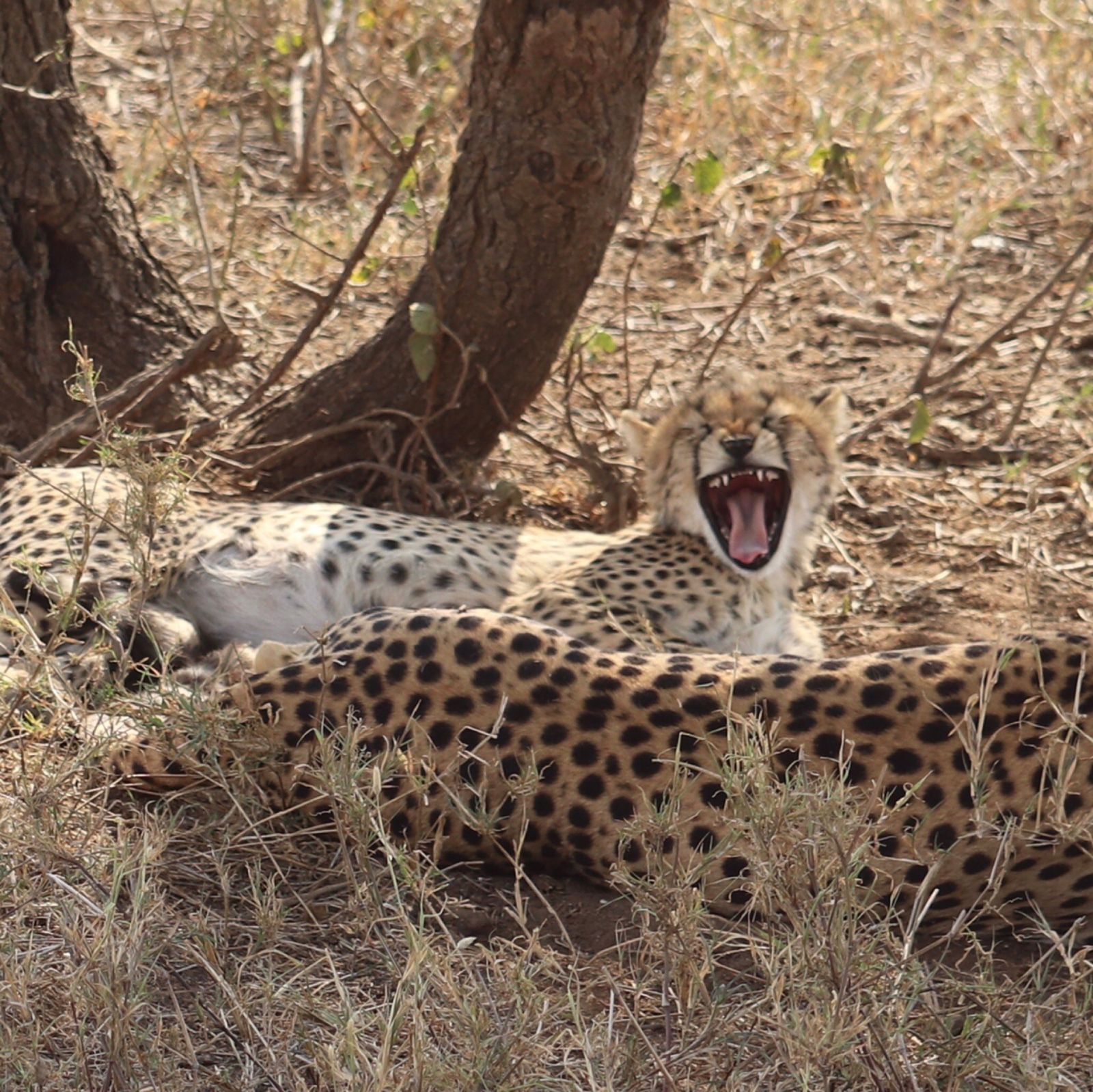
Unlike leopards, cheetahs hunt by day, which works in your favour. They tend to be active in the cooler hours of morning and late afternoon, avoiding the fierce midday heat and also the times when lions and hyenas, which steal their kills and threaten their cubs, are most about. A cheetah sighting on a Ruaha safari often means watching an animal in the open, alert and scanning, which makes for superb viewing and photography when it happens.
Leopards hide in the riverine thickets and the branches above your head. Cheetahs sit out on the open plain scanning for prey. Finding both in one trip means covering two very different kinds of country.
How Guides Track Leopards and Cheetahs on Safari
Both cats are found through the same patient detective work. Fresh tracks in the sand of a road or riverbed tell a guide what passed and when, and the size and shape distinguish a leopard’s rounded print from a cheetah’s, which shows the claw marks its semi-retractable claws leave behind. Alarm calls are the loudest clue, since baboons, impala and vervet monkeys all sound off sharply when a cat is nearby, and a guide who hears that will turn toward it immediately.
Beyond the signs, guides scan constantly and know where individual cats have been active recently. Reports shared between vehicles help, so a leopard found by one guide can be reached by another before it moves off. For leopards, the technique is largely about looking up into trees and into shade rather than across open ground. For cheetahs, it is about scanning distant rises and open country with binoculars. That difference in method is why a guide will change how they drive depending on which cat is the target on a cat tracking safari.
Best Time of Day for a Cat Spotting Safari
Timing matters as much as place. The early morning drive is prime for both cats, since leopards may still be out before retreating to cover for the day, and cheetahs use the cool light to hunt before the heat builds. The late afternoon into dusk is the other strong window, when leopards begin to stir toward their nocturnal activity and cheetahs make a second hunt. Through the hot middle of the day, both cats lie up in shade and are much harder to find, which is one more reason the classic safari rhythm of early and late drives works so well. For a cat spotting safari, being out at first light and staying out to dusk is the single biggest thing you can do.
Telling Leopards and Cheetahs Apart in the Field
The two cats are easy to confuse from a distance, so it helps to know what to look for. A leopard is heavy and muscular, built for power, with a broad head, a thick tail and rosette markings that form little clusters like flowers. A cheetah is slender and long-legged, built for speed, with a small head, solid round spots rather than rosettes, and two dark lines running from the inner eyes down to the mouth that look like tear marks. Behaviour gives them away too, since a cat lying along a horizontal branch is almost always a leopard, while one sitting upright on a mound in the open is a cheetah. Learning these differences adds a lot to the sighting on a Ruaha safari, and your guide will happily talk you through them.
Leopard country. Riverine woodland, big trees along the Great Ruaha and Mwagusi, rocky outcrops and broken ground below the escarpment. Look up into branches and into deep shade.
Cheetah country. Open plains and lighter bush where speed pays off, often on raised ground like termite mounds where they sit and scan for prey.
Prime hours. Early morning and late afternoon into dusk for both cats. The hot middle of the day sends them into shade and makes finding them far harder.
What to Bring for a Cat Spotting Safari
Since cat spotting happens on standard game drives, the kit is familiar, but a couple of items matter more than usual. Binoculars are the single most useful thing you can carry, since both cats are often first spotted at distance and a leopard in a tree is far easier to confirm through glass than with the naked eye. A camera with a decent telephoto lens gives you reach for animals that keep their distance, and a beanbag steadies it on the vehicle.
Beyond optics, bring warm layers for the cold early starts when the cats are most active, sun protection for later in the day, and spare batteries and memory, since a good cat sighting produces a lot of frames. Most of all, bring patience. Both leopards and cheetahs reward the traveller willing to sit quietly with a sighting and let it unfold rather than pushing on to the next thing on a cat spotting safari.
Realistic Expectations on Leopard and Cheetah Sightings
It is worth being honest about the odds, since these are not guaranteed animals. Leopards are seen fairly regularly in Ruaha and a stay of several nights gives a good chance, though plenty of visitors go home without one, since the cats are secretive and superbly hidden. Cheetahs are considerably scarcer, thinly spread across a huge park, so a sighting is a stroke of real fortune rather than something to count on.
That uncertainty is part of what makes finding them so satisfying. The way to improve your chances is straightforward: stay several nights rather than one or two, get out on every drive including the early ones, tell your guide the cats are your priority so the drives can be planned accordingly, and consider a night drive if your camp offers one for the leopards. Approach a Ruaha safari hoping for both cats and delighted by either, and the park usually delivers something memorable.
Best Time of Year for Leopard and Cheetah Safaris in Ruaha
The dry season from June to October is the best window for both cats, and the peak from August to October is better still. As the bush thins and the grass drops, visibility improves dramatically, which matters enormously for animals that rely on concealment. Water shrinks back to the river, drawing prey into predictable areas, and the cats follow. Thin cover plus concentrated prey is the combination that makes the late dry season the strongest time for a cat spotting safari.
In the green season from November to April, tall grass and thick vegetation make both cats much harder to see, even though they are still present, and the dispersed prey means the animals range more widely. The park is beautiful and quiet then, and the birding is at its best, so a green-season trip has plenty going for it, but if leopards and cheetahs are your main goal, aim for the dry months and give yourself several nights.
Frequently Asked Questions
Are leopards easy to see in Ruaha?
Leopards are present in good numbers and seen fairly regularly, but they are secretive and superbly camouflaged, so sightings are never guaranteed. Look for them in riverine woodland, big trees and rocky outcrops. A stay of several nights, early drives and a night drive if your camp offers one all improve your chances considerably.
Does Ruaha have cheetahs?
Yes. Ruaha holds one of the few remaining cheetah populations in East Africa, which gives the park real standing among big-cat destinations. That said, cheetahs are thinly spread across a vast area, so a sighting is a genuine stroke of fortune rather than something to expect. Look for them on open plains and raised ground where they scan for prey.
What is the difference between a leopard and a cheetah?
A leopard is heavy and muscular with a broad head, thick tail and rosette markings in flower-like clusters. A cheetah is slender and long-legged with a small head, solid round spots and dark tear lines running from the eyes to the mouth. A cat draped along a branch is almost always a leopard, while one sitting upright on a mound in the open is a cheetah.
When is the best time to see leopards and cheetahs?
The dry season from June to October, sharpest from August to October, when thin bush improves visibility and prey concentrates near the water. Early morning and late afternoon into dusk are the prime hours, since both cats avoid the midday heat. In the green season tall grass makes both far harder to spot.
How much does a cat spotting safari cost?
Leopard and cheetah spotting happens on standard game drives, so the cost is that of any Ruaha safari, with no separate fee. Park entry is currently around 30 US dollars per non-resident adult per 24 hours before 18 percent VAT, with reduced rates for residents and East African citizens. A night drive, which helps for leopards, carries its own fee, often around 50 dollars per person. Confirm current fees with TANAPA before you travel.
Plan Your Ruaha Safari
Finding leopards and cheetahs depends more on the skill of your guide and the time you give it than on luck alone, so this is one goal worth planning around properly. The safari companies and tour operators listed on this website run drives across Ruaha with guides who know where the cats have been active, and they can build your days around the habitats and hours that give the best chance of both.
Whether the budget is tight or open, the drives get built around what you most want to see, and the flights, park bookings and camp choices are handled in the background so none of the admin lands on you. Want a proper quote, or just a steer on timing for the cats? Reach out to the operators listed here, and a real person, not a bot, will get back to you.