Hippo and Crocodile Viewing in Ruaha National Park
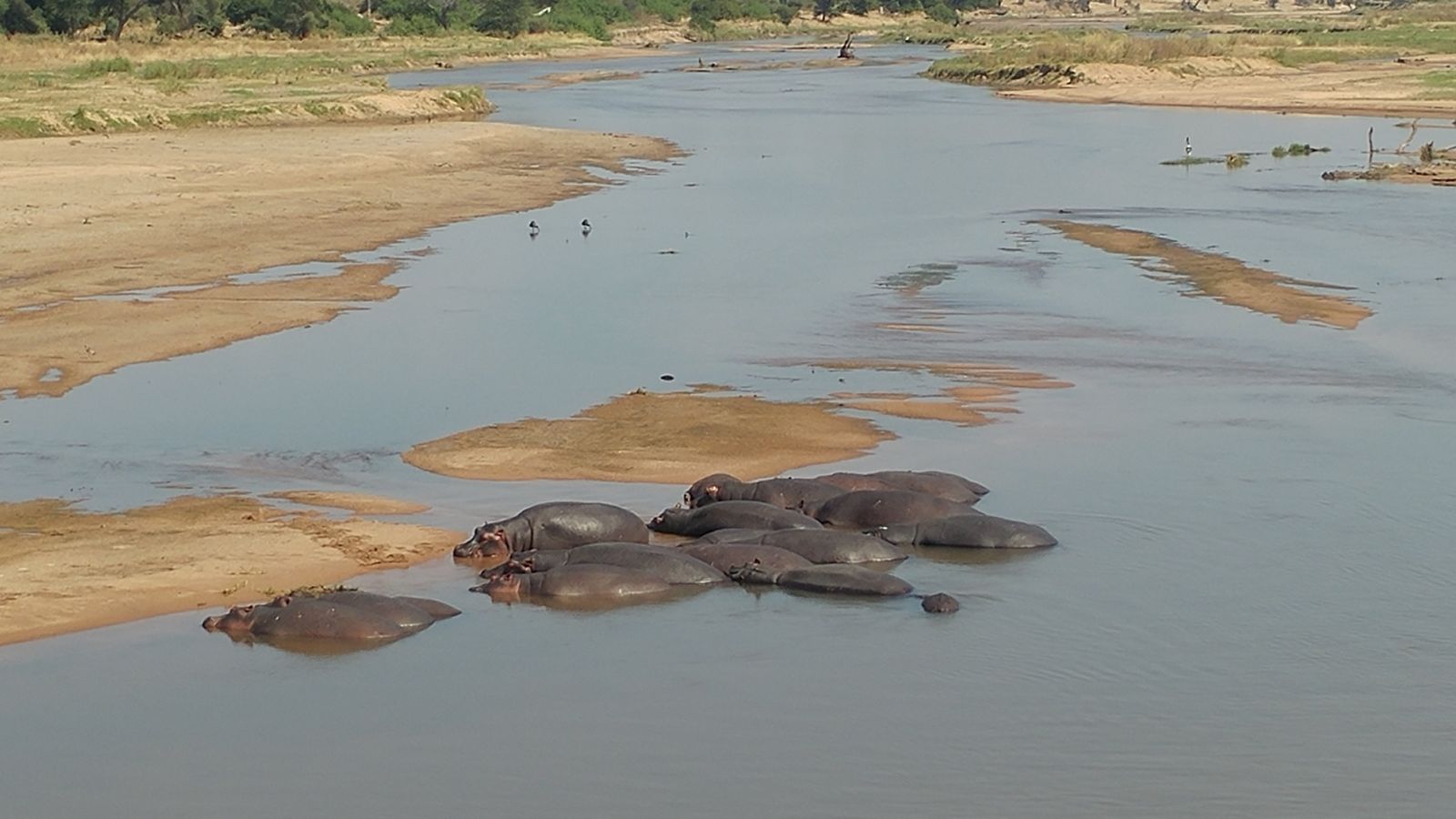
Hippo and crocodile viewing in Ruaha National Park centres on the pools of the Great Ruaha River, where hippos crowd together through the day and Nile crocodiles bask on the sandbanks. The hippo pool near the park headquarters is a reliable stop, and the dry season packs both species into shrinking water. Ruaha is one of Tanzania’s largest national parks, in the south-central Iringa Region, and the anchor of the country’s quieter southern safari circuit.
Watching Hippos and Crocodiles on a Ruaha Safari
The river residents are among the easiest and most entertaining wildlife to watch on a Ruaha safari. Unlike the cats, which take finding, hippos and crocodiles are where the water is, day after day, so a stop at a good pool is close to a guaranteed sighting. That reliability makes them a favourite with first-time visitors and families, and a fine way to fill the hours between predator searches.
What makes them worth more than a passing look is the behaviour. A pod of hippos is a noisy, quarrelsome society, full of grunts, yawns and shoving matches, and a long stop at a pool usually delivers some action. Crocodiles are the opposite, lying motionless on a sandbank for hours, but that stillness is its own spectacle when you consider what these animals are capable of. Together they give the river a character quite different from the dry bush around it.
The Hippo Pool Near Park Headquarters on Safari
The best-known spot is the hippo pool near the Msembe headquarters area, close to the bridge over the Great Ruaha, which most road visitors pass on the way in. It is a natural first stop, and many trips begin here almost by accident, with a pod of hippos packed into the water and crocodiles stretched out on the banks nearby. Because it sits close to the park entrance and the main road network, it is easy to include on the start or end of a drive.
Do not treat it as merely a photo stop, though. Spend twenty minutes and the pod will usually give you something, a territorial dispute between bulls, a calf riding on its mother’s back, or the whole group shifting position as the sun moves. Guides know the pools that hold the most animals at any point in the season, so ask which is best on your dates rather than assuming the nearest one is the only option on a Ruaha safari.
Where Else to Find Hippos and Crocodiles on Safari
Beyond the headquarters pool, the whole length of the Great Ruaha holds both species wherever the water is deep enough to persist. As the dry season advances and the river breaks into a chain of pools, the hippos are forced to crowd into whatever remains, which concentrates them dramatically. Some pools end up holding far more animals than the space comfortably allows, which is where the squabbling and jostling comes from.
Crocodiles follow the same logic, gathering where the fish and the drinking game are. Look for them on exposed sandbanks and the edges of pools, often lying with their mouths open to regulate their temperature, which is a cooling behaviour rather than a threat. A slow drive along the river in the dry season will usually turn up both species at several points, so the viewing is not confined to a single famous spot on a Ruaha safari.
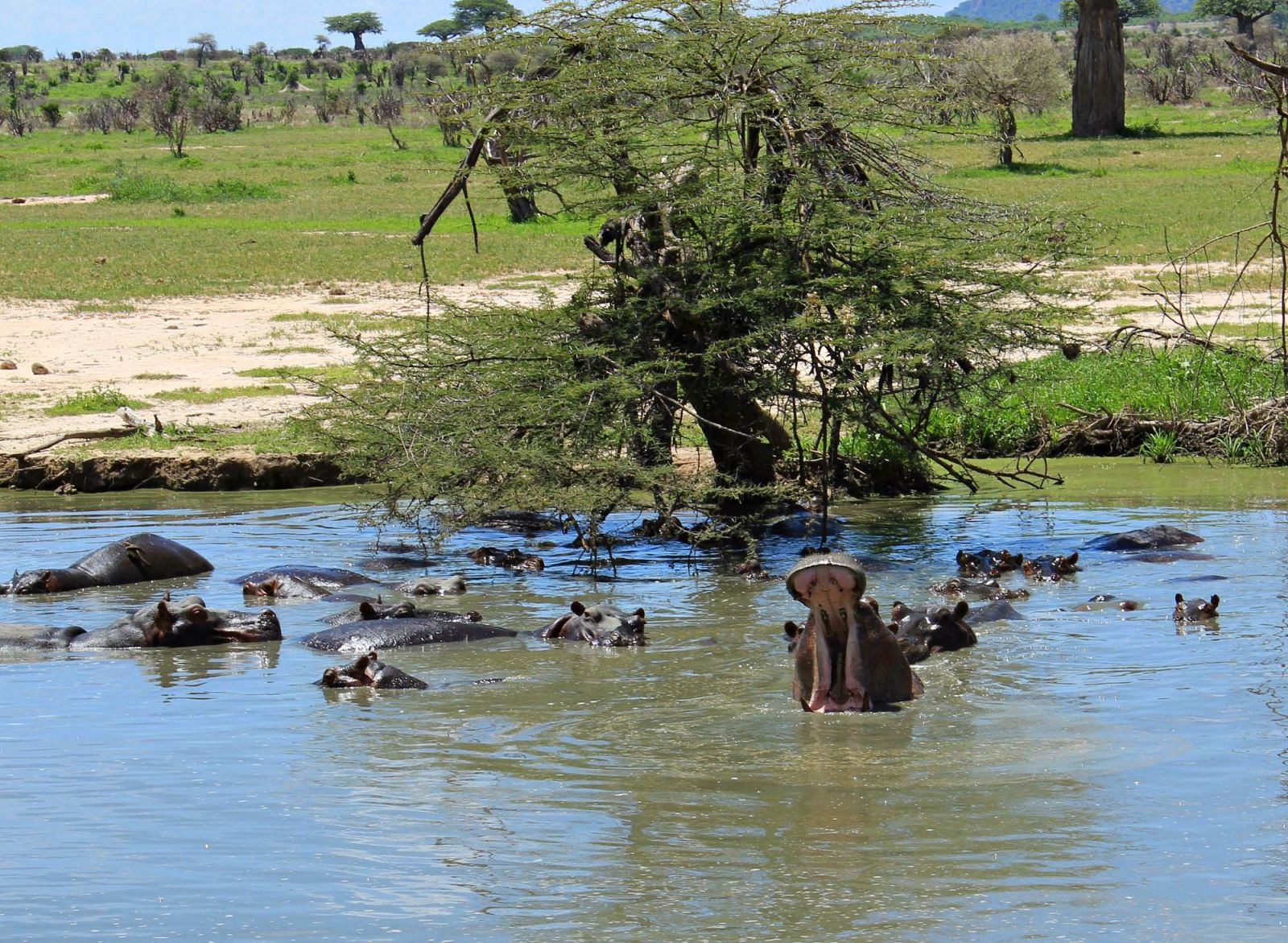
As the Great Ruaha shrinks to a chain of pools, the hippos crowd into whatever water is left. The result is a noisy, jostling society packed into a space that barely fits them, and it makes for compelling watching.
Hippo Behaviour Worth Watching on Safari
Hippos spend their days in the water to keep their skin from drying and burning, then leave at night to graze on land, sometimes walking several kilometres to feed. That daily rhythm means the daytime sightings you get are of animals at rest, socialising and squabbling rather than feeding, which is exactly when the entertaining behaviour happens.
Watch for the big yawn, which looks comical but is a threat display showing off the tusks, and for bulls confronting each other over territory in the pool. Calves stay close to their mothers and are fiercely protected. You will also notice the constant grunting and honking that carries a surprising distance, and the way the pod surfaces and submerges in sequence. Despite their bulk and placid appearance, hippos are among Africa’s most dangerous animals, which your guide will factor into where the vehicle stops on a Ruaha safari.
Nile Crocodile Watching Along the Great Ruaha River
The Nile crocodiles here are large and ancient in design, hauled out on sandbanks through the day to warm themselves before slipping into the water to hunt. They take fish, and they ambush game that comes to drink, so the same pools that draw impala and buffalo to the water’s edge are the ones where a crocodile waits.
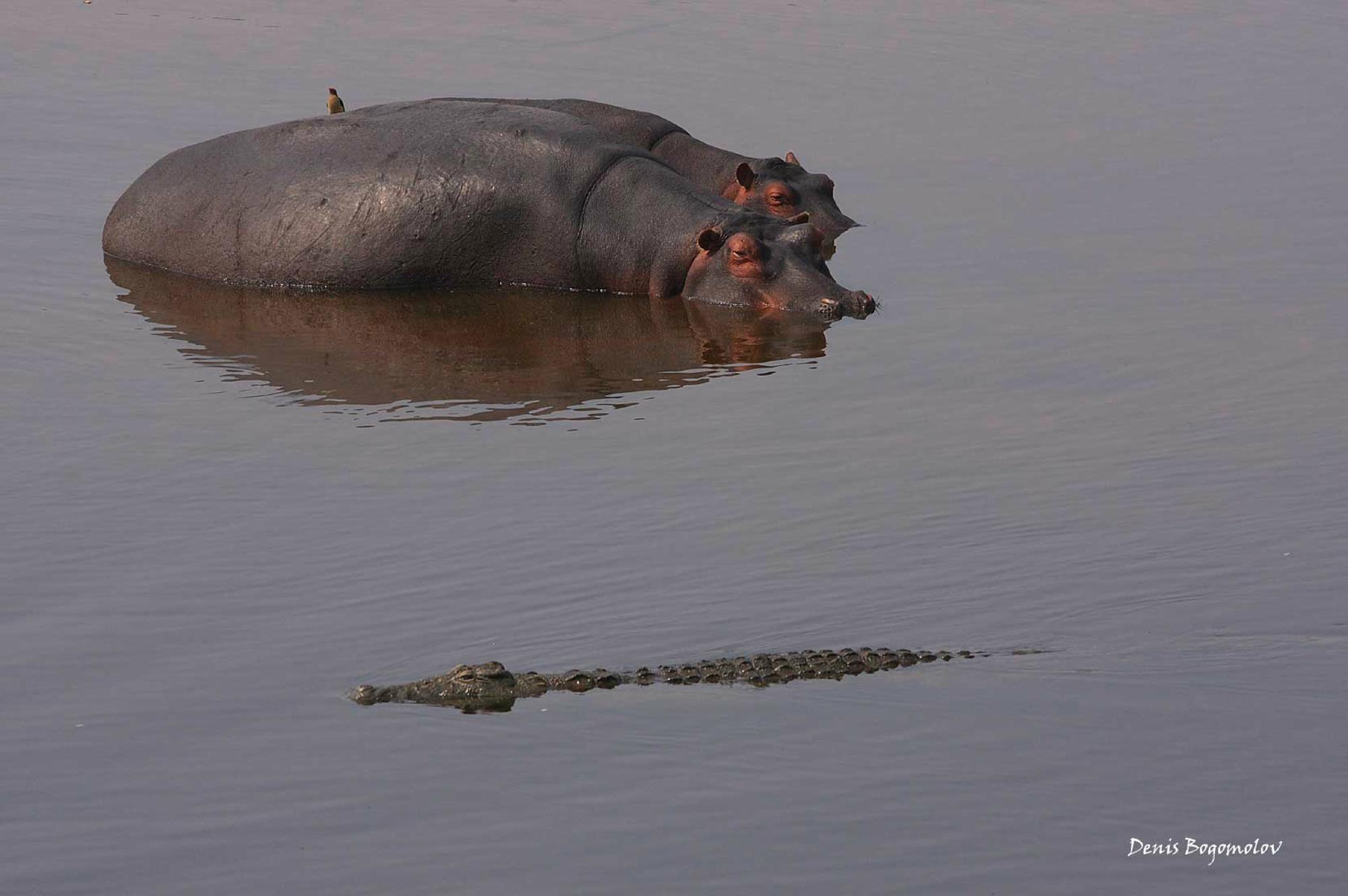
They are far more active than they look. A crocodile lying still for an hour can move with shocking speed when something comes within reach, and guides will point out the tension in a scene where game is drinking at a pool with crocodiles present. Watching that standoff, prey animals edging nervously to the water while the crocodile lies motionless, is one of the quieter dramas of a river sighting. The dry season, when everything must come to the same shrinking water, is when this plays out most often on a Ruaha safari.
The River Ecosystem Around the Pools on Safari
The pools are not just about the two headline species. Because they hold the only permanent water for miles in the dry season, they become hubs for everything else, so a stop at a hippo pool often delivers far more than hippos. Elephants come down to drink and bathe, buffalo and antelope file in nervously, and the birdlife along the water is superb, with fish eagles calling from the trees, herons and storks working the shallows, and kingfishers darting along the banks.
This is why an unhurried stop at a good pool is one of the more productive things you can do on a drive. Rather than moving on quickly, park up and let the wildlife come to the water, and over an hour you may see a broader cross-section of the park’s animals than a long drive would produce. The pools are the beating heart of the dry-season park on a Ruaha safari.
Safety and Etiquette at the Water on Safari
Both species deserve real caution, and the rules are simple. Stay in the vehicle at the water’s edge unless your guide explicitly says otherwise, and never approach the bank on foot at an unmarked spot, since crocodiles ambush from the water and hippos leaving or returning to a pool can be extremely dangerous if you block their path.
Keep your voice down and your movements calm at a sighting, both for safety and because a quiet vehicle sees more natural behaviour. Your guide will choose where to stop, keeping a sensible distance and an escape route, and that judgement is what makes the viewing relaxed rather than risky. If you are on a walking safari near the river, the armed ranger’s instructions about the water are strict and worth following to the letter on a Ruaha safari.
Best Time of Year for Hippo and Crocodile Viewing in Ruaha
The dry season from June to October is the best time, and the peak from August to October is best of all. As the river shrinks, the hippos are forced into fewer, smaller pools, so you see far more animals packed together than at any other time, and the crocodiles gather where the fish and the drinking game concentrate. The tension around the pools, with everything coming to the same water, is at its highest then.
In the green season from November to April, the river runs full and the hippos spread out along its whole length, so the dramatic concentrations disappear and both species are harder to find in numbers. You will still see them, and the green country is beautiful, but for sheer spectacle at the water, the late dry season is the time to come on a Ruaha safari.
Frequently Asked Questions
Where is the best place to see hippos in Ruaha?
The hippo pool near the Msembe park headquarters, close to the bridge over the Great Ruaha, is the best-known and most reliable spot, and most road visitors pass it on the way in. Beyond that, pools along the whole length of the Great Ruaha hold hippos, with the concentrations rising as the dry season shrinks the river.
Are hippos and crocodiles dangerous?
Yes, both deserve real caution. Hippos are among Africa’s most dangerous animals, particularly when their path between water and grazing is blocked, and crocodiles ambush from the water with surprising speed. Stay in the vehicle at the water’s edge unless your guide says otherwise, and never approach a bank on foot at an unmarked spot.
Why do hippos stay in the water all day?
To keep their skin from drying out and burning in the sun. They spend the day in the water resting and socialising, then leave at night to graze on land, sometimes walking several kilometres to feed. This is why daytime sightings show hippos at rest, squabbling and yawning rather than feeding.
When is the best time to see hippos and crocodiles?
The dry season from June to October, sharpest from August to October, when the shrinking river forces hippos into fewer pools and concentrates crocodiles where the fish and drinking game are. In the green season the full river lets both species spread out, so the dramatic concentrations disappear.
How much does hippo and crocodile viewing cost?
River viewing happens on standard game drives, so the cost is that of any Ruaha safari, with no separate fee. Park entry is currently around 30 US dollars per non-resident adult per 24 hours before 18 percent VAT, with reduced rates for residents and East African citizens. Flights and accommodation add to the total. Confirm current fees with TANAPA before you travel.
Plan Your Ruaha Safari
Knowing which pools hold the most animals on your dates, and stopping long enough to let the river come alive around you, is where a good guide adds real value. The safari companies and tour operators listed on this website run drives along the Great Ruaha and know the pools that reward an unhurried stop through every part of the season.
Whether the budget is tight or open, the drives get built around what you most want to see, and the flights, park bookings and camp choices are handled in the background so none of the admin lands on you. Want a proper quote, or just a steer on the best river stops? Reach out to the operators listed here, and a real person, not a bot, will get back to you.