Nyamakuyu Rapids
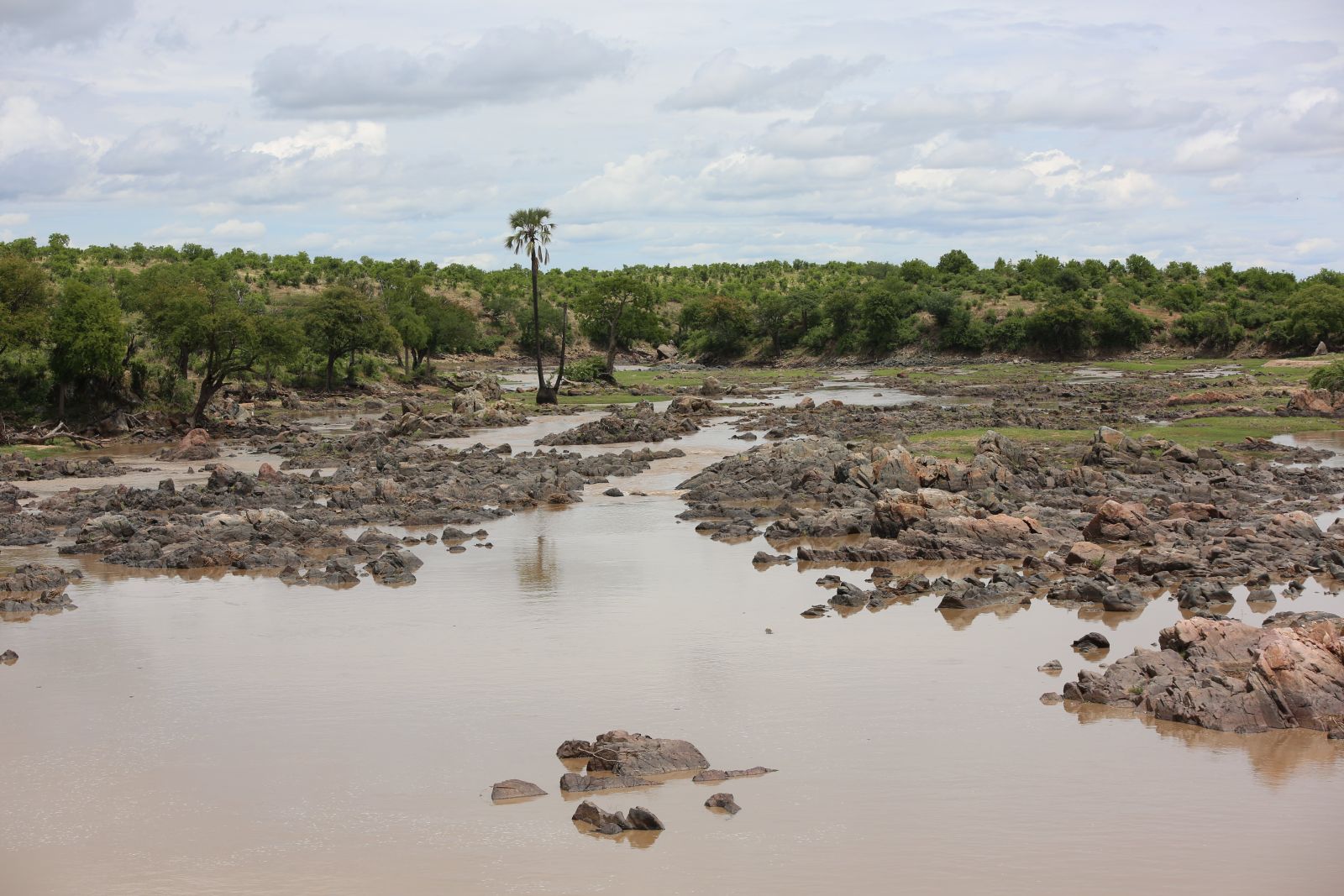
The Nyamakuyu Rapids are one of the named rocky stretches of the Great Ruaha River, where the channel narrows and drops over rock so the water breaks white and audible, a striking change of mood in a park otherwise defined by dry heat and stillness. Ruaha is one of Tanzania’s largest national parks, in the south-central Iringa Region, and the anchor of the country’s quieter southern safari circuit.
The Rapids on a Ruaha Safari
The Great Ruaha runs roughly 160 kilometres along the eastern boundary of the park, and it does not travel that distance as a placid, uniform waterway. It passes through rugged gorges and over rocky shelves as well as across broad sandy reaches, and where the bed is rock rather than sand the current picks up and breaks into rapids. Nyamakuyu is one of the named stretches where this happens.
What makes such a place worth stopping at is the contrast. Most of a Ruaha safari is conducted in silence, or near enough, with the sounds of the bush being birdsong, insects and the occasional call of an animal. Moving water is a different register altogether, and the noise of a river working over rock carries a surprising distance in dry air. It is a reminder that this is a river valley, not simply a plain with a channel through it.
A word of honest expectation setting is worth giving. These are rapids in the sense of broken, fast water over rock, not waterfalls or anything on the scale of the great cataracts elsewhere in Africa, and in a dry year at the end of the season a named rapid may be little more than a trickle between stones. Treat a visit as an interesting stop on a drive rather than a set-piece attraction, and it will not disappoint.
The Rocky River and the Rift Valley on Safari
The reason the river has these rocky sections comes down to geology. The Great Rift Valley crosses the park, and the valley of the Great Ruaha is considered an extension of it, with an escarpment wall running along the western side of the valley, rising perhaps fifty to a hundred metres in the north-east and considerably higher toward the south-west.
That structure means the river is not meandering across a flat floodplain but working through terrain with real relief, cutting gorges where the rock resists and spreading out where it does not. The rapids and cataracts occur where the harder rock reaches the channel. Understanding this makes the rocky stretches read as part of a larger story about the country rather than isolated curiosities on a Ruaha safari.
Most of Ruaha is silent. The sound of water working over rock carries a long way in dry air, which is why a rapids stretch stops people in a way that another fine view does not.
Wildlife Watching Around the Rapids
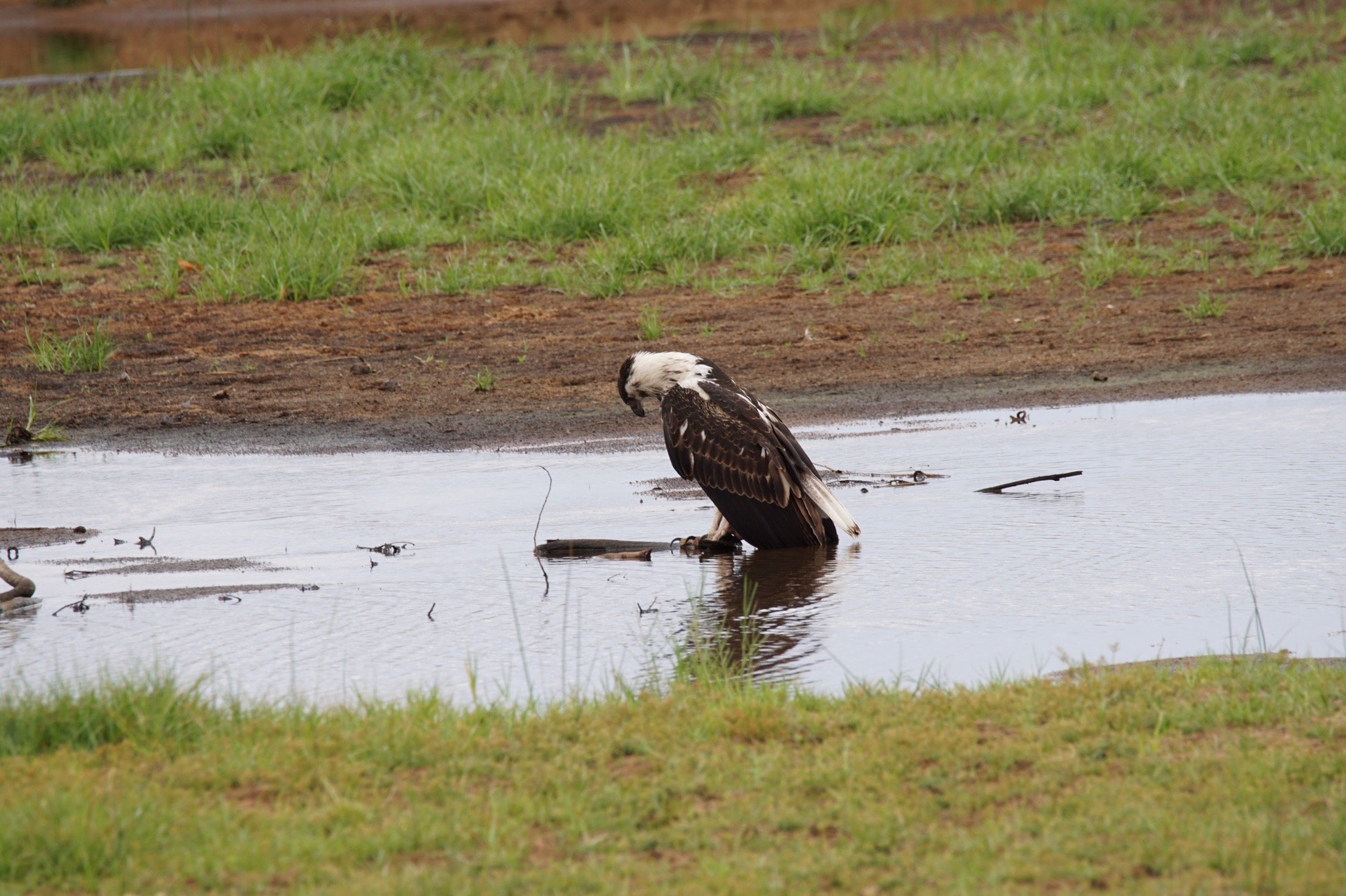
Rocky river sections hold their own interest for wildlife. Crocodiles use the calmer water below and beside broken stretches, and hippos favour the deeper pools that form where the current slows. The fast, oxygenated water over rock suits fish, which in turn draws fish-eating birds, so this is good country for the African fish eagle, herons and kingfishers working the edges.
The rocks themselves offer perches and nesting ledges that a sandy bank does not, and the vegetation that gathers where spray and seepage keep the ground damp differs from the surrounding dry bush. Larger animals come to drink where access allows. So while a rapids stretch will not deliver the density of a broad dry-season pool, it adds variety to a morning’s Ruaha safari.
The gorge sections are worth attention for their own sake too. Where the river has cut down through rock, the walls rise steeply and the vegetation clinging to them differs from anything on the open plains, with figs and other trees rooting in crevices where they can reach moisture. Baboons work these slopes, raptors nest on the ledges, and the shade and shelter make them small pockets of quite different habitat within the wider dry bush.
How the Rapids Change Through the Safari Seasons
The seasonal swing transforms these stretches more than almost anything else in the park. In the green season from November to April, fed by rains that bring an annual average somewhere between 500 and 800 millimetres, the river runs full and fast, and the rocky sections are at their most impressive, loud and white with real force behind them.
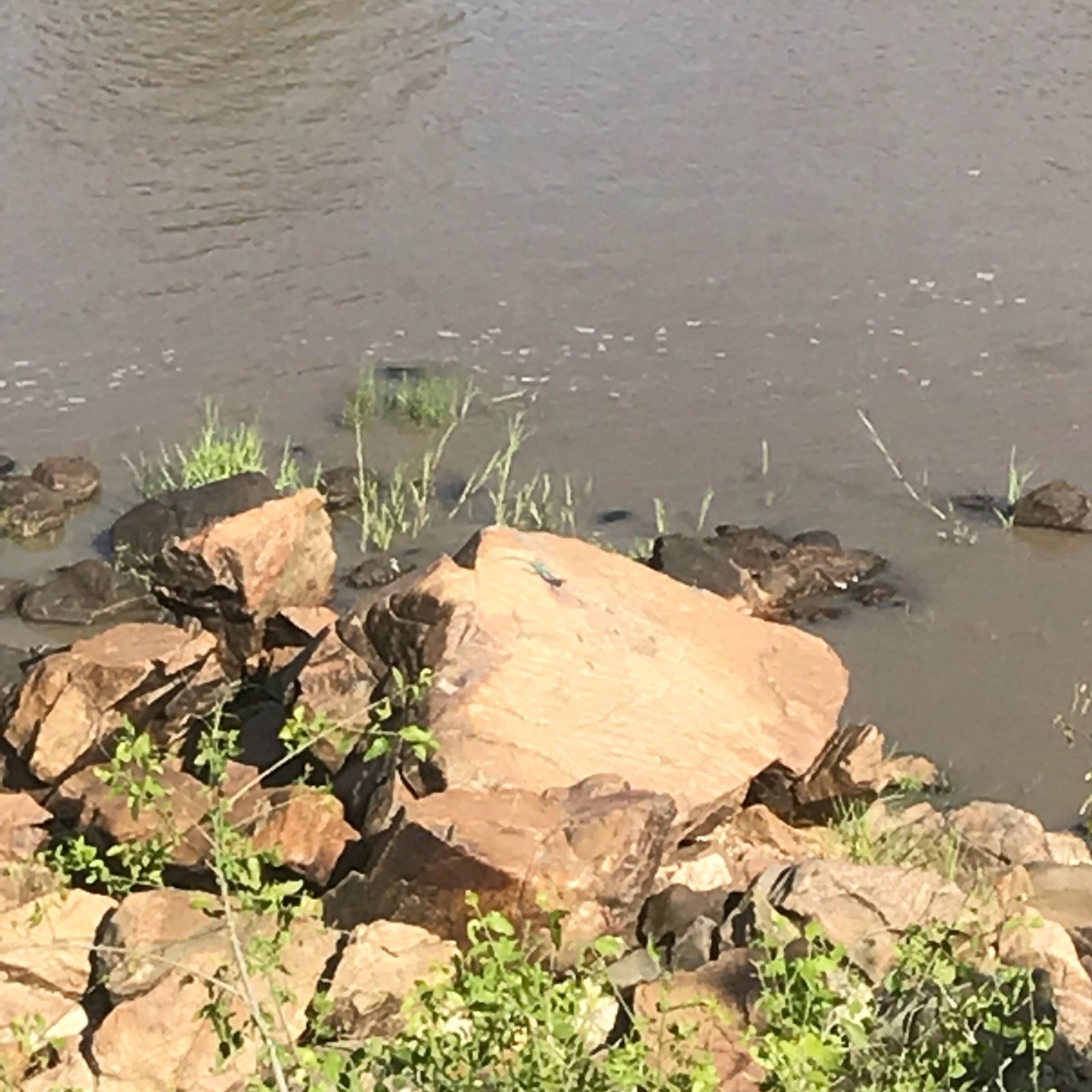
By the height of the dry season the same stretch may be reduced to a trickle threading between exposed boulders, or in the worst years scarcely flowing at all, since the river’s dry-season flow has been badly reduced by water use upstream. The rock that was invisible under white water in March stands bare in October. Which version you see depends entirely on when you come on a Ruaha safari.
Visiting the Rapids on a Ruaha Safari
Rocky river stretches are seen from the land, since there are no boat safaris on the Great Ruaha within the park, so a visit means a game drive to a point where the track approaches the river and a stop to look and listen. Guides know which stretches are accessible and which are worth the detour at a given water level, so ask rather than assuming.
Take real care near the water. Crocodiles ambush from the river and hippos are dangerous when their route between water and grazing is blocked, so stay in the vehicle unless your guide says otherwise and never approach a bank on foot at an unmarked spot. Wet rock is treacherous underfoot. Handled sensibly, a stop at a rapids stretch is a rewarding pause in a drive on a Ruaha safari.
Cut the engine when you stop, which most guides do without being asked. The whole point of a rocky stretch is the sound of it, and an idling diesel drowns the one thing you came to hear. A few minutes of silence also lets you pick up the birds working the water and any alarm calls from the bank, which is how a scenic stop sometimes turns into a wildlife sighting.
Photographing the Rapids on Safari
Moving water gives a photographer something the rest of the park does not. A faster shutter freezes the spray and shows the texture of broken water, while a slower one blurs it into smooth white, and having a support to steady the camera makes the second approach possible from a vehicle or a firm footing.
The surrounding elements are what turn a picture of water into a picture of Ruaha, so include the rock, the fringing trees, or a baobab on the bank above to place it. Early and late light is kinder here as everywhere, since harsh midday sun on white water blows out to featureless glare. In the green season the fuller river gives far more to work with on a Ruaha safari.
Best Time to See the Nyamakuyu Rapids on Safari
For the rapids themselves, the green season from November to April is much the better time, when the river carries volume and the rocky stretches run hard and loud. This is the opposite of the advice for general game viewing, which peaks in the dry months, so the two priorities pull against each other.
If your trip falls in the dry season from June to October, as most do, expect the rapids to be a modest feature rather than a spectacle, with low water threading between exposed rock, and treat them as one stop among many rather than a highlight. The shoulder weeks of May and November are a reasonable compromise, with water still in the river and the game beginning to concentrate on a Ruaha safari.
May in particular is worth considering if the river interests you. The long rains have generally finished, so the roads are becoming passable again and the camps are reopening, yet the river is still carrying the season’s water and running properly over its rocky sections. The country is green, the crowds have not arrived, and rates sit below peak. You give up some of the dry-season game concentration in exchange, but for a traveller who wants to see the river at work rather than reduced to pools, it is a sensible compromise.
Frequently Asked Questions
What are the Nyamakuyu Rapids?
They are one of the named rocky stretches of the Great Ruaha River, where the channel narrows and drops over rock so the current breaks white. The river runs roughly 160 kilometres along the park’s eastern boundary through rugged gorges and rocky shelves as well as broad sandy reaches, and rapids form where the bed is rock.
Why does the Great Ruaha have rapids?
Because of the terrain. The Great Rift Valley crosses the park and the Great Ruaha valley is considered an extension of it, with an escarpment along the western valley side. The river works through country with real relief rather than a flat floodplain, cutting gorges where the rock resists and forming rapids where harder rock reaches the channel.
When are the rapids most impressive?
In the green season from November to April, when rains bring an annual average of roughly 500 to 800 millimetres and the river runs full and fast. By the height of the dry season the same stretch may be reduced to a trickle between exposed boulders, since dry-season flow has been badly reduced by water use upstream.
Can you get close to the rapids?
They are viewed from the land, since there are no boat safaris on the Great Ruaha within the park, so a visit means driving to a point where the track approaches the river. Take real care near water, since crocodiles ambush from the river and hippos are dangerous when their path is blocked. Stay in the vehicle unless your guide says otherwise.
How much does it cost to visit the rapids?
Visiting is part of a normal game drive rather than a separate charge. Park entry is currently around 30 US dollars per non-resident adult per 24 hours before 18 percent VAT, with reduced rates for residents and East African citizens. Flights and accommodation add to the total. Confirm current fees with TANAPA before you travel.
Plan Your Ruaha Safari
Whether a rapids stretch is worth the detour depends on the water level on your dates, which is exactly the kind of thing a local guide knows and a brochure does not. The safari companies and tour operators listed on this website work with guides who know the river’s rocky sections and can tell you what to expect when you travel.
Whether the budget is tight or open, the drives, guiding, flights and park bookings are handled in the background so none of the admin lands on you. Want a proper quote, or just a steer on what the river will be doing on your dates? Reach out to the operators listed here, and a real person, not a bot, will get back to you.