Elephant and Buffalo Herds in Ruaha National Park
Watching elephant and buffalo herds in Ruaha National Park means following the Great Ruaha River and its sand tributaries in the dry season, when thousands of elephants and vast buffalo herds gather at the water. Ruaha carries one of Tanzania’s largest elephant populations, and its buffalo herds draw the big lion prides that hunt them. Ruaha is one of Tanzania’s largest national parks, in the south-central Iringa Region, and the anchor of the country’s quieter southern safari circuit.
Watching Elephant and Buffalo Herds on a Ruaha Safari
The great herds are one of the defining sights of a Ruaha safari. Elephants here number in the thousands across the greater ecosystem, among the largest concentrations in Tanzania, and buffalo gather in herds that can run to hundreds of animals moving together. Both species depend on water, so in the dry season they concentrate along the river system in numbers that make for genuinely impressive viewing.
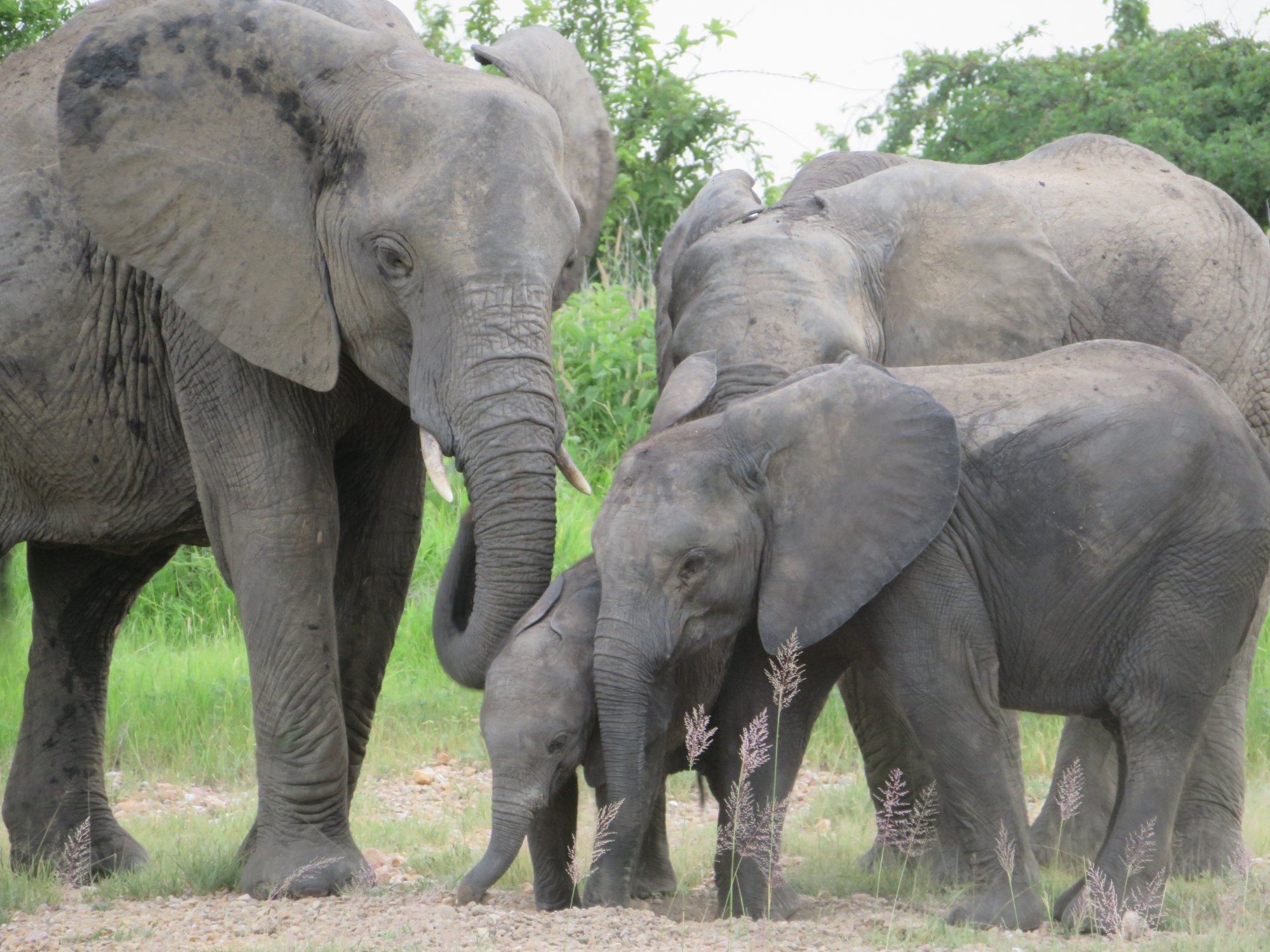
What makes the herds worth seeking out is not just the numbers but the behaviour. Elephant families have complex social lives, led by an old matriarch whose memory of water and routes keeps the group alive, and watching a family interact at the river rewards a long, unhurried stop. Buffalo, meanwhile, move as a mass, and a big herd flowing across open ground with dust rising behind it is one of the more powerful things you will see in the bush.
Where to Find Elephant Herds on a Ruaha Safari
Water dictates everything. In the dry months, head for the Great Ruaha River and the sandy tributaries like the Mwagusi, where the elephants come to drink, bathe and dig. Family groups gather along the banks, often lingering for an hour or more, which gives you time to settle in and watch rather than catch a passing glimpse. The baobab plains also hold elephants, particularly where waterholes linger, and a herd moving beneath the towering baobabs is one of the classic images of the park.
The behaviour worth seeking out is the digging. As the surface water disappears, elephants use their trunks and front feet to excavate holes in the sandy riverbeds, reaching water that sits below the surface and waiting for it to seep in clean. These elephant-dug wells then serve other animals once the herd moves on, turning a dry riverbed into a busy little water source. Finding a family at work in a sand river is a highlight guides actively look for on a dry-season Ruaha safari.
Buffalo Herds and Where to See Them on Safari

Buffalo are less celebrated than elephants but arguably just as impressive in numbers. Ruaha’s herds can be enormous, and in the dry season they crowd the river country where the grazing and water are, forming dense masses of animals that move and feed together. Look for them on the open floodplains near the river, in the grassy areas between woodland, and at the water in the cooler parts of the day.
Buffalo are also worth watching for how they behave. They are alert and defensive, and a herd will turn as one to face a threat, with the older bulls at the edges. Solitary old bulls, often caked in mud and separated from the herd, are a common sight too, and they are the ones to treat with most respect, since a lone buffalo is unpredictable. Your guide will keep a sensible distance, which is both safer and better for watching natural behaviour on a Ruaha safari.
In the driest weeks, Ruaha’s elephants dig wells in the sand with their feet and trunks, and the water they find serves half the valley. It is one of the great pieces of problem-solving in the bush.
Predators, Buffalo and the Drama of a Ruaha Safari
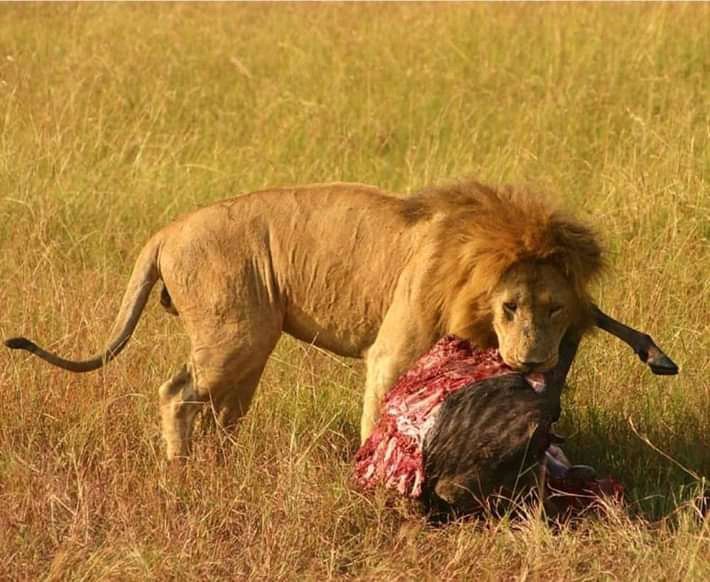
The buffalo herds are the reason Ruaha’s lions are the way they are. The park’s prides are unusually large, sometimes topping twenty animals, and that size lets them tackle prey most lions would not attempt, buffalo above all. Where the buffalo crowd the river in the dry season, the big prides set up nearby, so the two are found together and the potential for dramatic interaction is high.
Watching a pride test a buffalo herd is gripping even when nothing comes of it, as the lions probe the edges looking for a weak animal while the herd bunches and turns to face them. Buffalo do not go quietly, and they will mob a lion or drive one off, so the outcome is genuinely uncertain. A hunt is never guaranteed and often unfolds fast, but the river country in the dry months at dawn and dusk gives the best chance of witnessing this on a Ruaha safari.
Best Time of Day for a Herd Watching Safari
Both elephants and buffalo come to water in the cooler parts of the day, so an early morning or late afternoon drive along the river is far more productive than the baking midday hours, when the animals retreat into shade. The trick is to position yourself near a good stretch of river or a pool and be patient, letting the herds come to you rather than chasing them across the country.
The light works in your favour at the same hours. Early and late sun casts the warm, low light that suits big grey animals against dusty ground, and the sight of a long line of elephants filing down to drink against a setting sun is exactly the image most people hope to bring home. On a Ruaha safari, timing the drive to be at the water in the golden hours is the single best move for herd viewing.
How to Photograph the Herds on Safari
Big herds reward a bit of photographic thought. A telephoto zoom lets you frame individual animals and behaviour, the trunk lifted, the calf tucked under its mother, the mud caked on a buffalo’s flank, while a wider lens captures the scale of a herd against the baobabs and the big sky, which is often the more powerful image. A beanbag on the vehicle steadies a long lens far better than hand-holding.
Beyond the gear, the advice is to wait for behaviour rather than settle for a portrait. A stationary herd is far less interesting than one drinking, dust-bathing, digging or moving in a line, so give a sighting time. Keep the background in mind, since a clean backdrop turns a snapshot into a picture, and shoot in the early and late light where you can. Patience at one good herd beats rushing between several on a Ruaha safari.
Safety Around Elephant and Buffalo on Safari
Both species command respect, and your guide’s judgement is what keeps a sighting safe and relaxed. Elephants, particularly a matriarch with young calves, want space, and a guide will read the herd’s mood and position the vehicle accordingly, backing off if the animals show signs of unease. Buffalo, especially lone bulls, are treated with similar caution.
Your part is simple. Stay seated in the vehicle, keep your voice down and your movements calm, do not stand up suddenly near the animals, and never ask the guide to push closer than they think wise. On a walking safari, where an armed ranger leads, the rules are stricter still, and you follow instructions exactly. Handled properly, watching the great herds is safe, and incidents are rare precisely because the precautions are taken seriously on a Ruaha safari.
Best Time of Year for Herd Watching Safaris in Ruaha
The dry season from June to October is when the herds are at their most concentrated, and the peak from August to October is best of all. As the land dries and water shrinks to the river and its sandy beds, elephants and buffalo have nowhere else to go, so they gather in numbers along the water where they are easy to find, and the elephant digging behaviour is at its most active. Thin bush also improves visibility.
In the green season from November to April, water is everywhere, so both species disperse widely across the park and the great concentrations break up. You will still see elephants and buffalo, and the sight of herds moving through green country under dramatic skies has its own appeal, but the sheer numbers at the water are a dry-season phenomenon. For herd watching above all, aim for the second half of the dry season on your Ruaha safari.
Frequently Asked Questions
How many elephants are in Ruaha?
Ruaha carries one of Tanzania’s largest elephant populations, commonly put around ten thousand across the greater ecosystem. The park’s size, its connection to a much wider protected area, and the year-round water in the Great Ruaha system all help support these numbers, which recovered after heavy poaching pressure in past decades.
Where is the best place to see the herds?
Along the Great Ruaha River and its sand tributaries such as the Mwagusi, especially in the dry season when both elephants and buffalo gather at the remaining water. The baobab plains hold elephants too, particularly near lingering waterholes. Basing at a central camp near the river puts you close to the best herd country.
Why do elephants dig in the riverbeds?
Because water remains just beneath the sand of the seasonal rivers even after the surface has dried. Elephants dig down with their trunks and front feet to reach it, creating wells that other animals then use once the herd moves on. Watching this behaviour in a dry sand river is a highlight of a dry-season trip.
Can you see lions hunting buffalo in Ruaha?
It is possible, and Ruaha offers a better chance than most parks, since its unusually large prides are bold enough to tackle buffalo and the two concentrate together along the river in the dry season. A hunt is never guaranteed and often over quickly, but watching a pride test a herd at dawn or dusk is gripping in itself.
How much does a herd watching safari cost?
Elephant and buffalo viewing happens on standard game drives, so the cost is that of any Ruaha safari, with no separate fee. Park entry is currently around 30 US dollars per non-resident adult per 24 hours before 18 percent VAT, with reduced rates for residents and East African citizens. Flights and accommodation add to the total. Confirm current fees with TANAPA before you travel.
Plan Your Ruaha Safari
Being at the right stretch of river in the golden hour is the difference between a passing glimpse of the herds and a long, close sighting, and a good guide makes that happen. The safari companies and tour operators listed on this website run drives along the Great Ruaha and the Mwagusi through the dry season, and they can base you where the elephants and buffalo gather so you catch them at their best.
Whether the budget is tight or open, the drives get built around what you most want to see, and the flights, park bookings and camp choices are handled in the background so none of the admin lands on you. Want a proper quote, or just a steer on timing for the herds? Reach out to the operators listed here, and a real person, not a bot, will get back to you.